


Meet Armindo de Deus, the project coordinator for the Kiwa RELOKA local project in Timor-Leste.
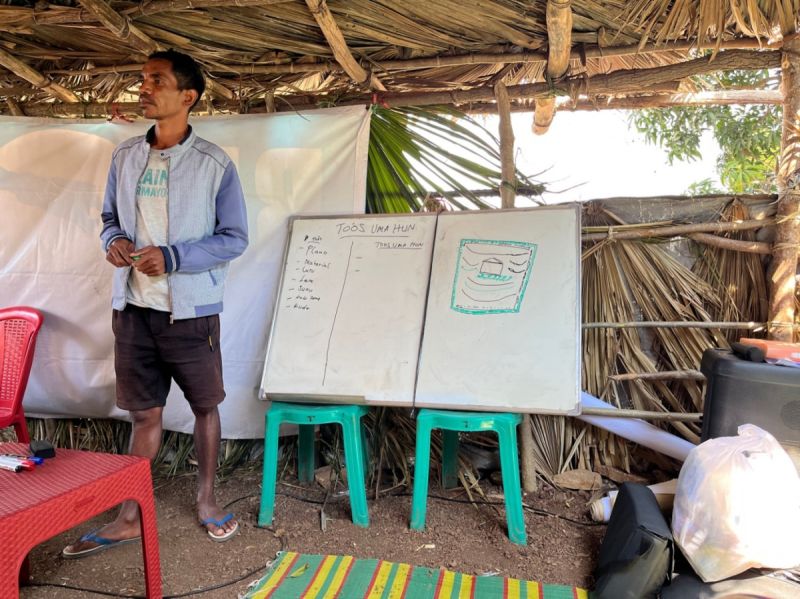
Armindo has been training two rural communities in Timor-Leste to grow sustainable home gardens and generate long-term livelihood opportunities through natural dye production, as part of a Kiwa Initiative-supported project led by the RELOKA Foundation since 2025.
These communities steward important land and natural resources and need support to use what they have to their full potential. They also face numerous challenges, including water shortages due to natural water wells drying up and unpredictable rainfall which impacts agriculture yields. Many buy food from what little income they earn while others slash and burn their land and cut down trees unsustainably.
Armindo teaches them how to adapt to environmental change and build resilience through permaculture and business planning. From explaining how soil can be mixed with natural material to grow vegetables to demonstrating how communities can work with the topography of their land, his trainings are bridging knowledge gaps in meaningful ways. They are also a long-term commitment, ensuring that the skills taught can be sustained, he says. “We can teach them across different seasons.”
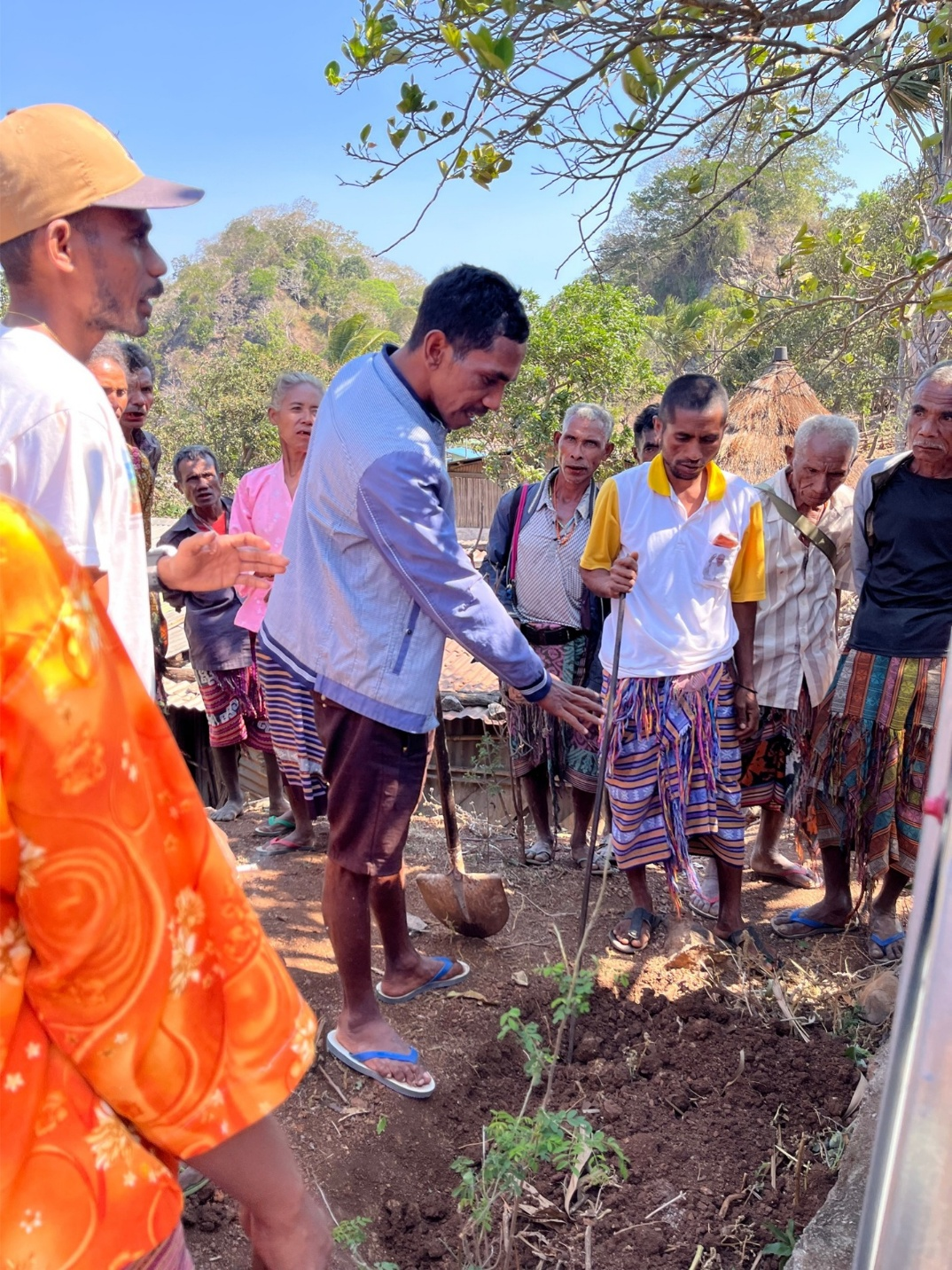
Armindo explaining soil mixture during a home garden training © Hilly Bouwman - Kiwa Initiative - 2026
As project lead, Armindo is responsible for day-to-day implementation in the field engaging with community groups, such as the Taum Abas women’s weavers group in Taiboko village in the Oecusse municipality. Much of his extensive knowledge of permaculture and passion for educating others comes from lived experience.
“I grew up in a family high-up in the mountains, mainly living off of our coffee plantation,” he explains. “We live simple lives, far away from any cities, and we are focused on surviving with nature.”
It also comes from years dedicated to learning and practicing his craft. Armindo studied agriculture at university and after graduating in 2015, volunteered with PERMATIL, a non-profit organisation committed to promoting nature-based permaculture initiatives within Timor-Leste. He became a permaculture trainer several years later who cared deeply not only about sharing knowledge on permaculture but also demonstrating how that knowledge could translate into tangible outcomes on the ground. Armindo then joined the RELOKA Foundation in 2025 to coordinate the Kiwa project.
“I like to work with RELOKA because they have a different approach, which is more connected to helping people move forward,” he says. “Apart from conservation they also focus on women’s empowerment and economic opportunities.”
Improving the way Timorese people farm and conserve nature is one of several core priorities in this project. RELOKA is also concerned with securing livelihoods for the most marginalised. Women are some of the poorest and most vulnerable in the community with “less rights than men in decision-making at the household level”, Armindo explains. The project empowers women to use their voices and contribute to business trainings they take part in. It also supports women’s livelihoods specifically in natural dyeing and textiles, connecting the products they make, such as indigo, uskai (Symplocos) powder and cotton yarn directly with buyers.
The progress achieved so far has been encouraging. RELOKA is helping preserve Indigenous traditions, such as cotton making and natural dye production, and driving women’s economic participation. Community groups and even outsiders have adapted lessons from pilot gardens to their own home plots. Armindo says many have stopped burning weeds and leaves and instead use them to make organic compost for their gardens.
The project is transforming approaches to gardening and supporting income-generating activities, building a better future for underserved communities in Timor-Leste. Community champions like Armindo are showing them that it is possible while respecting nature, protecting cultural traditions and breaking down social barriers.
The RELOKA project is implemented with the financial support of the European Union, Agence Française de Développement, Global Affairs Canada, Australian Department of Foreign Affairs and Trade and New Zealand Ministry of Foreign Affairs and Trade, as part of the Kiwa Initiative framework.
The content of this publication is the sole responsibility of IUCN Oceania Regional Office and does not reflect the views of the donors


