


Project news
-

© Benedict Yamamura
24 July 2026
Kiwa at ICRS 2026: Pacific voices at the 16th International Coral Reef Symposium
-

© Kiwa Initiative
30 May 2026
Young ocean guardians are rising in Kosrae
-

© Kiwa Initiative
28 May 2026
Palau States Sign Landmark Partnership to Advance Community-Led Marine Conservation
-

© © Samantha Kies-Ryan
5 May 2026
Roots to Reefs and Beyond: Six Lessons from Micronesian Community-Based Fisheries Practitioners
-

© Kiwa Initiative
1 April 2026
Community Forest Stewardship in Weloy Municipality, Yap State (FSM)
-

© Kiwa Initiative
20 January 2026
MiCOAST workshop: strengthening community-based fisheries management in Micronesia
-

© Kiwa Initiative
25 November 2025
Micronesia: community-based fisheries management at the heart of the Roots to Reefs and beyond event
-

© Kiwa Initiative
13 November 2025
Micoast leads the way: Micronesia hosts a regional event on Nature-based Solutions for sustainable fisheries
-

© Kiwa Initiative
14 October 2025
The Kiwa MiCOAST project showcased at the Pacific Islands Oceans Conference
-

© Kiwa Initiative
6 August 2025
Marshall Islands Spotlight: MiCOAST Project Strengthens Community-Based Fisheries Management
-

© Kiwa Initiative
21 May 2025
KIWA Micoast project in Micronesia: Communities turn to sustainable aquaculture
-

© Samantha Kies-Ryan- MiCOAST
7 May 2025
Nauru’s Community-Based Fisheries Journey: Building Trust, Knowledge, and Stewardship
-

© Kiwa Initiative
6 May 2025
MiCOAST: In Pohnpei, Micronesia, Fishers involved in an awareness session on Sustainable Marine Resource Management
-

© Onereef
21 August 2024
Empower Pacific Communities thanks to Nature based Solutions : Interview of Patterson Shed
-

© OneReef
6 June 2024
Interview of Francisca Sohl, from the MiCOAST Regional project
-

© ©Andy George
3 June 2024
Interview of Andy George from the MiCOAST Regional project
-

© Baptiste Jaugeon
23 May 2024
The power of sustainable fisheries management in the Pacific
-

© One Reef
18 April 2024
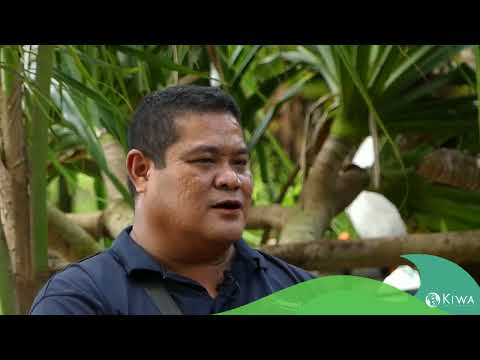
Watch the interview of Wayne Andrew from the Kiwa MiCOAST project !
-

© Sachi Jones Singeo - KiwaInitiative
25 January 2024
Kiwa #MiCOAST Regional Project Takes Off in Micronesia
-

© Kiwa Initiative
6 November 2023
Job Opportunities with the MiCOAST Kiwa’s Regional Project!
Community Forest Stewardship in Weloy Municipality, Yap State (FSM)
1 April 2026
© Kiwa Initiative
Sometimes the greatest treasures are found in places we think we already know. When you come together to map your environment, the most familiar landscapes that can be taken for granted can yield new surprises. When the Weloy community set out to map their area and natural resources as part of their Weloy Resources Management Plan, they discovered and identified caves, bunkers, stone paths, traditional house foundations (family house and two men’s houses – Mabuu Village and one meeting house in Alog village), and water lenses (natural springs). They also identified two locations near springs where land crabs can safely shed their carapace and recover. Dr. Margie Falanruw helped identify tree species, and during this assessment, a rare tree was discovered. It is considered an “unresolved species”, indicating that it is not well known, so it is likely endemic and possibly a new species. This indicates that the Weloy forest reserve is probably home to other rare and endemic tree species waiting to be found! The team continues to identify plants and other species within the forest reserve. They also discovered a type of vine called Ruwol – this vine, discovered by Magmay and his team, seems to have flowers at the tip of its leaves instead of at the stem.
OneReef Micronesia has been working with the Weloy Municipality in Yap State in the Federated States of Micronesia on the implementation of their Weloy Resources Management Plan. Activities include mapping the streams, caves, cultural sites and historical landmarks inside the forest reserve so they can better protect them. The working group has also cleared and maintained forest trails which has allowed community members and guests to enjoy a guided hike during Yap Day celebrations and the 4th Micronesia Expo — creating opportunities to connect with nature and cultural heritage.
Weloy is one of three communities in Yap that MiCOAST supports; the others include Ngulu Atoll and Malay and Thabeth villages who co-manage the Reey Resources Management Area. These communities are engaging in a range of conservation activities such as resource management, restoration and monitoring, surveillance and enforcement, and outreach and awareness.
The mapping exercise undertaken by Magmay Magmay and his team, with technical assistance from Chief Anthony Yalon of the Yap State Department of Resources and Development (Marine Resources and Management Division), was designed to capture information about the forest reserve and important landmarks and traditional knowledge. Weloy has a lot of biodiversity and ecosystems and water springs, and it hosts the first settlement in Yap (Alog village). The forest reserve is 98.7 hectares and includes diverse landscapes such as native forest and even savannah.
Magmay Magmay, the Coordinator for the Weloy Forest Conservation and Restoration project – implementation of the Weloy Forest Stewardship Plan, has been working in conservation since 2007. Magmay started working on the Nimpal Channel Marine Conservation Area program in 2007 as a member of the technical team and was appointed Chairman of the program’s management Core Group in 2013. Acknowledging his experience in marine conservation and monitoring, the Weloy leadership assigned him to head the development and implementation of the Weloy Forest Stewardship Plan in 2015 with technical partners and the community.
For Magmay, the work is deeply personal. Protecting and conserving the Weloy forest means protecting the place he calls home. As a continuation of his work in forest conservation and management, he has been coordinating the current MiCOAST supported forestry project since January 2025. He heads the project planning and working groups. He is committed to protecting and conserving the area of Weloy, which is his home.
The community has also been clearing a trail through their forest so tourists and visitors can enjoy the beauty of their natural environment. When asked when he will know that their conservation project has been a success Magmay thoughtfully says, “when all the cultivated trees are growing and bearing fruit and we have money coming in from people hiking the trails and the bird and bat populations have also increased outside of the forest reserve.”
The project involves a wide range of Weloy community members who volunteer in clearing and maintaining the paths and undertake restoration and mapping activities. Among them are high school students Aven Gorong and Gerson Gorong aged 15 and 14, who live in Mabuu village and Akim Paagaer, age 18, who lives in the village of Dugor. The three of them have been working with this project for nearly a year – assisting with ditch and stream cleaning, trail maintenance, bush and tree clearing, and planting. Along with their fellow team members they are advocates of the Weloy Forest Reserve and its management through strong community stewardship and leadership.
They really enjoy the caves and learning about the forest and spending time with older members of the forest stewardship group. Key features in the forest that they have also learned about include historical sites, house platforms, old village sites, water sources, and plants and their uses. Experiencing the abundance of the forest, including bats and birds and other biodiversity in the forest reserve, has been a highlight for them.
They feel this is an important project because the forest has always been a main resource for the villages and Municipality and when there is no ship or plane, this is where the community will rely on for food, medicine, springs (water) and other necessities. They also feel this work is important for them and future generations as this reserve and forest area is the source of livelihood and subsistence for their communities.
When communities embark on long-term conservation efforts, it can be difficult to predict the impacts that will emerge over time. But for Magmay, there is already one clear sign that their work is making a difference. When asked what has most surprised him over his time working in conservation, Magmay’s eyes light up and he replies, “the birds have come back.”
It is a small observation, but one that carries deep meaning. Through strong community stewardship, guided by both traditional knowledge and modern management approaches, the Weloy forest is recovering. Through strong community-led stewardship utilizing modern management approaches, the birds and other treasures discovered in the Weloy forest will be protected for current and future generations to enjoy and experience. This effort will also preserve traditional resource management knowledge and practices, strengthening and sustaining resiliency not just for Weloy but for Yap State.
Written by: Magmay Magmay, Vanessa Fread and Samantha Kies-Ryan.
Acknowledgements: We would like to recognize the hard work of the Weloy Forest Stewardship working groups. We humbly thank the Weloy Council of Chiefs, Weloy Executive Council and the Weloy community for their strong leadership and support. A special Kammagar to Dr. Margie Falanruw, of the Yap Institute of Natural Science (YINS) and to all partners for their continued support and technical assistance.
Furthermore, the traditional leadership and people of Weloy, extend their gratitude to the Yap State Government, FSM National Government, UNDP (through the FSM GEF 5 Ridge to Reef Project), Yap Community Action Program, the Micronesia Challenge, The Nature Conservancy, and the Micronesia Conservation Trust for their initial and continued support in developing and implementing the Weloy Forest Stewardship Program.
Empower Pacific Communities thanks to Nature based Solutions : Interview of Patterson Shed
21 August 2024
© Onereef
“Micronesian Community-based Fisheries Management as NbS for Coastal Resilience” (MiCOAST) is a regional project, held by OneReef with partners across Palau, Federated States of Micronesia, Marshall Islands, and Nauru, and aims to empower coastal communities.
Patterson Shed, Pohnpei Director at OneReef Micronesia, shares his vision on enhancing hashtag#enforcement of marine protected areas and other practices, through powerful, scaled-up partnerships between governments and local communities.
This testimony shows how collaboration can create a stronger, more sustainable future for our hashtag#oceans. This is one of the objectives of the Kiwa MiCOAST project !️
Learn more about the importance of Nature based Solutions in the Pacific.
Interview of Andy George from the MiCOAST Regional project
3 June 2024
© ©Andy George
🔍 The Kiwa #MiCOAST regional project, meaning “Micronesian Community-based Fisheries Management as NbS for Coastal Resilience”, and held by OneReef with partners across Palau, Federated States of Micronesia, Marshall Islands, and Nauru, will help coastal communities' lives by empowering local people.
🎥 In this video, we dive into the urgent issue of declining fisheries resources with Andy George, Executive Director of Kosrae Conservation and Safety Organization, a partner of the Kiwa MiCOAST project in Kosrae (Federated States of Micronesia). Andy emphasized the need to expand marine survey efforts beyond the inner reefs and introduce livelihood activities to address food security matters in Kosrae.
🌟 Click the link below to watch the full video: https://www.youtube.com/watch?v=Cb-H9VNrlRM
Interview of Francisca Sohl, from the MiCOAST Regional project
6 June 2024
© OneReef
In this video, meet Francisca Sohl Obispo, a remarkable force driving change in the coastal communities. She works for the Conservation Society of Pohnpei #CSP, for the Kiwa MiCOAST project in Pohnpei, Federated States of Micronesia #FSM.
Her testimony on the pivotal #role of #women in #community dynamics, particularly in relation to #tradition and #leadership, offers invaluable perspectives on fostering #GEDSI.
Job Opportunities with the MiCOAST Kiwa’s Regional Project!
6 November 2023
© Kiwa Initiative
🌿🌏 The MiCOAST Project coordinated by OneReef Worldwide Stewardship is looking for dynamic professionals to join their Regional Project Management Unit.
🚀The available positions include:
· Project Finance-Administration Officer: are you a numbers wizard with a passion for meticulous organization and thrive in a fast-paced environment? This role could be your perfect fit - Apply here: https://bit.ly/40ogOEI
· Communications Officer: if you are a creative thinker with a passion for effective communication and content creation - Apply here: https://bit.ly/3SIZb0L
· Gender, Equity, Disability and Social Inclusion (GEDSI) Specialist: join us in promoting inclusivity and equity in this project - Apply here: https://bit.ly/40ms4BA
📆 Deadline for Applications: Continuous, full consideration of applications guaranteed until December 4th 2023. Applications submitted thereafter shall be considered until the position is filled.
Kiwa #MiCOAST Regional Project Takes Off in Micronesia
25 January 2024
© Sachi Jones Singeo - KiwaInitiative
A groundbreaking step towards safeguarding coastal fisheries in Micronesia just took place! The kick-off meeting of the Kiwa Initiative's #MiCOAST Regional Project, held from January 22-26, 2024, in #Pohnpei (Federated States of #Micronesia) and co-hosted by the Conservation Society of Pohnpei and OneReef Worldwide Stewardship, was a hub of dynamic discussions, collaboration, and knowledge-sharing among the different stakeholders of this project.
Noteworthy participants included various organizations and agencies from the region, such as the Marshall Islands Conservation Society, Kosrae Conservation and Safety Organization, Rare, cCHANGE, the Nauru Fisheries and Marine Resources Authority, The Pacific Community-SPC, and other national, state, and local government entities, along with traditional representatives.
The event saw the presence of esteemed figures like T.H. Stevenson A. Joseph, Governor of Pohnpei, and H.E. Jo Cowley, Ambassador of Australia to the FSM, alongside influential traditional leaders and representatives from natural resource management, government sectors, and local communities. Their invaluable contributions underscored the significance of collaborative endeavors and the active involvement of #coastal #communities in achieving sustainable coastal #fisheries #management in Micronesia.
Stay tuned for exciting developments, and click here to read the press release: https://urlz.fr/puOB
Kiwa at ICRS 2026: Pacific voices at the 16th International Coral Reef Symposium
24 July 2026
© Benedict Yamamura
Auckland, 19-24 July 2026
The 16th International Coral Reef Symposium opened in Auckland on 19 July, running for six days at the New Zealand International Convention Centre. Held every four years by the International Coral Reef Society, ICRS is one of the largest global gatherings for coral reef science, conservation and management. It brings together researchers, marine managers, NGOs and decision-makers.
This is the first time the symposium has come to Aotearoa New Zealand. Sitting the event next to the Pacific Islands opens more room for customary knowledge and community-led management, which rarely take centre stage at meetings of this size. The 2026 theme, “Working together to ensure a future for coral reefs”, points the same way.
Two Kiwa-funded projects are in the room: MiCOAST, working across Micronesia, and Kiwa RESTORE, working in Samoa and across the Pacific.
MiCOAST brings the Micronesian experience
Simon Ellis (MERIP), Keoni Kattil (Marshall Islands Conservation Society) and Martin Romain (OneReef Worldwide Stewardship) represent the Kiwa MiCOAST project in Auckland, with other project partners. Their poster (board 270) makes the case for community-based fisheries management (CBFM) as a Nature-based Solution, with examples from the Marshall Islands, Pohnpei (FSM) and beyond.
MiCOAST is led by OneReef Worldwide Stewardship and runs through a network of non-governmental organisations across Palau, the Federated States of Micronesia, the Marshall Islands and Nauru. The people it sent to Auckland come from that field network, the ones who work on the islands with the communities.
Each is taking something home. Simon Ellis returns with new insights on emerging coral restoration techniques and ideas to adapt his work in Pohnpei. For Keoni Kattil, a first international conference, and a set of new connections to raise the profile of MICS. Martin Romain leaves with lessons from regional practitioners on community-owned reef management, ideas to strengthen MiCOAST’s approach across Micronesia, and a wider network of collaborators.
Samoa: Kiwa RESTORE on culture and science

Su’a Ulusapeti Tiitii, Kiwa RESTORE’s Samoa Project Manager at Conservation International, presented on 21 July. Her talk, “Culturally Grounded Marine Management: Evidence from the Kiwa RESTORE Project & Pacific Case Studies”, sat in a session on how local and Indigenous knowledge is shaping reef conservation and fisheries management across the Pacific.
Her argument was practical. In Samoa, marine conservation is not new. Long before Western regulations, villages managed their own reefs through Fa’asamoa, the traditional governance system, setting tapu areas where fishing stopped so fish and coral could recover.
Kiwa RESTORE builds on that. The project works with 15 coastal communities across three districts to review and develop Village Fisheries Management Plans, pairing traditional village rules with scientific monitoring of fish stocks, coral cover and reef health. Ulusapeti Tiitii also pointed to Fiji’s Lau Seascape Initiative, where an island-representative team leads local conservation with the backing of Lau’s customary chiefs.
Her takeaway for the room:
“While Pacific Island communities have much to contribute to the global conversation, there is also much to learn from innovative restoration approaches, emerging science and international partnerships that can further strengthen locally led conservation efforts.” Think globally, act locally.
Why Kiwa follows this event
The Kiwa Initiative funds Nature-based Solutions for climate adaptation in the Pacific. Coral reefs are the front line. They break the swell, they feed villages, and they are degrading faster than we can adapt.
ICRS is where coral reef science and field management meet. Sending people from the Pacific, not only scientists, changes what that conversation sounds like.
KIWA Micoast project in Micronesia: Communities turn to sustainable aquaculture
21 May 2025
© Kiwa Initiative
In the Federated States of Micronesia (FSM), local communities in Pohnpei and Kosrae are developing sustainable aquaculture practices through the regional Micoast project, supported by the Kiwa Initiative.
The species selected for farming, rabbitfish (Siganus randalli, locally known as kiaok), naturally gather along the coast during the new moon period. Juveniles are captured and placed in nursery cages before being distributed to families for farming.
This nature-based solution provides:
- additional income for families,
- reduced pressure on wild fish populations,
- a meaningful, intergenerational family activity.
As of 2025, ten families are already engaged in Pohnpei, and the project is expanding to Kosrae. MERIP (Marine and Environmental Research Institute of Pohnpei) and the Kosrae Conservation & Safety Organization (KCSO) recently held a training session in April to initiate the transfer of knowledge and prepare for the launch of new rabbitfish farms.
This initiative is a strong example of how community-led nature-based solutions can create long-lasting social, economic and ecological impact.
Marshall Islands Spotlight: MiCOAST Project Strengthens Community-Based Fisheries Management
6 August 2025
© Kiwa Initiative
The Second National Ocean Symposium (NOS) opened in the Marshall Islands, bringing together government representatives, mayors, Irooj, local leaders, fishers, andstakeholders from Majuro and the outer islands. The event focused on charting the future of the nation’s oceans, strengthening collaboration, and raising awareness on fisheries laws, regulations, and opportunities for funding and partnerships.
The Marshall Islands Conservation Society (MICS), with support from the regional MiCOAST project funded by the Kiwa Initiative and the Australian Government (DFAT), showcased its work in supporting communities to review and update their Natural Resource Management Plans.
MICS engaged participants through an information booth and workshops on fishing regulations, identifying local fish names, and mapping ciguatera cases across Majuro and the outer islands. Local Resource Officers (LROs) from Ujae, Maloelap, Mili, and Lae also joined the discussions, bringing their community perspectives.
As highlighted by MICS representative Dua Rudolph: “For us, the NOS is an important opportunity to come together as a team. For the LROs, it’s a chance to learn from other islands and bring those lessons back into their Management Plans.”
This event underlines the importance of strong collaboration between national institutions and local communities to safeguard fisheries and marine ecosystems across the Marshall Islands.
Micoast leads the way: Micronesia hosts a regional event on Nature-based Solutions for sustainable fisheries
13 November 2025
© Kiwa Initiative
The Kiwa Micoast team, is leading the organization of the Roots to Reefs and Beyond – Micronesia Fisheries Learning Event, to be held from 17–21 November 2025 in Koror, Palau.
Organized by Micoast in collaboration with the Pacific Community-SPC, Rare, and OneReef Worldwide Stewardship, the event will bring together community organizations, NGOs, researchers and regional partners from across the Pacific. Its aim: to share experiences, identify opportunities, and scale up Nature-based Solutions (NbS) for sustainable coastal fisheries management.
By convening practitioners from across Micronesia, Micoast is highlighting the power of regional collaboration to strengthen marine ecosystem resilience and support climate adaptation. This event embodies the spirit of the Kiwa Initiative: acting locally and collectively for a sustainable Pacific.
MiCOAST workshop: strengthening community-based fisheries management in Micronesia
20 January 2026
© Kiwa Initiative
In November 2025, the Kiwa MiCOAST project, supported by the Kiwa Initiative, took part in the Roots to Reefs and Beyond event held in Palau, in Koror. On this occasion, a regional workshop dedicated to community-based fisheries management (CBFM) in Micronesia brought together community representatives, practitioners, scientists and institutional partners from across the Pacific.
Over five days, participants exchanged on community governance practices, shared concrete experiences, and explored the connections between watersheds, coastal ecosystems and reefs. Discussions highlighted the central role of nature-based solutions, traditional knowledge and co-management approaches in sustaining fisheries resources, strengthening food security and increasing resilience to climate change.
This workshop illustrates the integrated roots to reef approach promoted by MiCOAST and confirms community-based fisheries management as a key lever for adaptation and long-term sustainability in Pacific island territories.


MiCOAST: In Pohnpei, Micronesia, Fishers involved in an awareness session on Sustainable Marine Resource Management
6 May 2025
© Kiwa Initiative
On 18 February, an awareness session brought together fishers, community representatives and local authorities at the Sokehs Council Chamber to discuss the boundaries of Marine Protected Areas (MPAs) and current fishing regulations. This initiative, supported by the Kiwa Initiative’s regional MiCOAST project, enabled open and constructive dialogue on sustainable marine resource management.
Organised by the Conservation Society of Pohnpei, with the support of the Sokehs Municipal Government, the event aimed to improve understanding of fishing rules while giving fishers the opportunity to voice their concerns, share traditional knowledge, and actively participate in local decision-making. This type of initiative directly contributes to enhancing fishers’ knowledge, protecting their livelihoods, valuing traditional practices, preserving marine ecosystems, and ensuring viable resources for future generations.
The awareness session is part of a Community-Based Fisheries Management (CBFM) course delivered by the University of the South Pacific, with the support of the SPC Coastal Fisheries Programme and the PEUMP Programme.
Micronesia: community-based fisheries management at the heart of the Roots to Reefs and beyond event
25 November 2025
© Kiwa Initiative
The Kiwa MiCOAST project took part in the “Micronesia Fisheries Event” in Koror, Palau, held from 17 to 21 November 2025, bringing together civil society organisations, national institutions and regional partners around community-based fisheries management (CBFM).
The initial discussions highlighted that CBFM is not a new approach in Micronesia. It builds on long-standing traditional practices rooted in island communities. In Palau, the customary “Bul” system exemplifies this historical model of community governance, based on local knowledge, fishers’ direct observations and strong cultural values that support sustainable management of marine resources.
Speakers underlined that there is no one-size-fits-all model for CBFM, with each territory developing an approachadapted to its own context. One principle remains central: communities must lead the process, and their objectives must remain the priority to ensure the long-term sustainability of coastal fisheries.
This event also marks the beginning of a collective effort to map CBFM initiatives across Micronesia, with the aim of better understanding the diversity of practices and strengthening the sharing of experiences between territories.
Nauru’s Community-Based Fisheries Journey: Building Trust, Knowledge, and Stewardship
7 May 2025
© Samantha Kies-Ryan- MiCOAST
Nauru is a country of fishermen and fisherwomen. You can see them as you drive around the coastline of this small country, which only takes twenty minutes to do. They are on the breakwater of the port casting out with their fishing rods or coming in on their boats, chatting in a friendly way to the Nauru Fisheries and Marine Resources Authority (NFMRA) officers in charge of monitoring catches.
At high tide you will see them reeling in eokoe (rainbow runners), eapwe (black trevallies) and itsibab (yellowfin tuna) at times – then returning home balancing their catch and fishing gear precariously on the back of their motorbikes. You’ll see them coming in carrying the emon and iubwiya (soldierfish and surgeonfish) fish they’ve speared strung together on a line. On the low tides they are out on the reef flats gleaning for dagiga (octopus) and emari (green snails) or are at the coral drop-off with fishing nets and cast nets, catching eweo (convict sturgeonfish) and dorangarang (goatfish) and other schooling reef fish that still sustain Nauruan diets.
Like many other island nations in the Pacific, Nauru’s coastal resources are under pressure. Fish stocks are declining, and there is growing urgency to ensure that marine ecosystems continue to feed and protect Nauru’s people into the future.
Focus on Community-based Fisheries Management
Monte Depaune, Deputy CEO of Fisheries at NFMRA and former Coastal Fisheries Manager (CFM), is engaged and interested in seeing Community Based Fisheries Management (CBFM) succeed in Nauru. “Whatever happens on land happens on the coast and the sea,” he explains. “We’re trying to involve our small island community here to be more proactive in looking after their own environment.”
Being Yeeting, the Fisheries Advisor at NFMRA explains that they are investing CBFM in Nauru because “it seems to be more appropriate. It will reflect communities’ views on wanting to be part of the management of coastal fisheries. It will increase their participation. Especially in the areas that have been designated as Marine Protected Areas. So with those areas that have been designated protected areas located all around Nauru, forming a kind of network, all the coral reefs around Nauru will benefit from. And you will have all the districts looking after portions of their reef. I think that’s an efficient way of tackling compliance and getting people to follow what’s needed to manage the coastal fisheries resources.”

A Different Path Toward Community-Based Management
CBFM in Nauru takes on a unique shape—especially given the absence of customary marine tenure. Unlike many neighbouring countries where nearshore waters are often co-managed through traditional ownership systems, Nauru’s reef and lagoon remain State-owned. The Coastal Fisheries and Aquaculture Act 2020 affirms this status; yet, importantly, opens a pathway for community participation and leadership in coastal fisheries management. Any district may petition the Minister to designate its adjacent near-shore waters as a Community Fisheries Management Area (CFMA). Ideally, once gazetted, the district can then elect a Community Fisheries Management Committee empowered to prepare—and legally enforce—a fisheries management plan for that area, drawing on established practices, traditional knowledge, and contemporary science and management advice. Yet turning CFMAs into practice remains difficult in Nauru; communities feel less invested because they don’t own the coastal waters and resources, technical support and funding to help communities in this role is sometimes limited, and the committees can change every three years, so progress often stalls.
Despite these challenges, NFMRA remains steadfast in supporting effective CBFM strategies. Monte explains, “CBFM hasn’t really taken off here as it has in many other island countries, but we’ve been mostly requesting information from the local fishers and building relationships through our Community Fisheries Team (CoFT). The idea is to develop trust between us and the community.”
Some progress has been made thus far. Being Yeeting explains, “There are some areas that have been identified through resource mapping with communities…More than half the districts have identified areas where they would like to have their marine managed areas be located.”
A Strategy for National Dialogue and Community Engagement
To build on this momentum, NFMRA is partnering with cChange under the Kiwa Regional MiCOAST Project, to create a CBFM National Information Strategy (NIS) to build understanding and engage communities in fisheries resource management.

“The NIS will help establish clear goalposts for NFMRA communication and provide a pathway by which information can be shared with communities and establish processes for dialogue and discussion,” explains Scott Radway, Director of cChange.
“It will also identify what tools, products and approaches will be most cost effective and impactful in encouraging community participation in identifying solutions for coastal fisheries management.”
Monte says, “We think it’s quite timely the way we’re putting things together. In 2020 the Coastal Fisheries Management and Aquaculture Act (CFMAA20) came into force. We’ve been working on Regulations to put some teeth in it. The difference with this type of law is that it’s not a top-down approach, it’s bottom up, so it can only be enforced or strengthened through Community Fisheries Management Plans (CFMPs). The CFMPs will provide the teeth for the communities to look after the resources that they have in their areas. It’s a way that they can apply for legal support to look after their own coastal areas.”
Monte continues: “NFMRA is hoping that through this system, that’s taken years of consultation, will encourage the community to be better stewards of their own environment in their community areas. Over time we hope that they can also build an understanding of Nature-based Solutions (NbS) and we can create this dialogue…where they can ask questions and can better understand how and why they’re looking after their areas.”
“We have gaps in our knowledge base, so we’re hoping that we can network with others to really drive this home and maybe one day we can have a very sound relationship with the community and how we collaboratively manage the marine environment around us.”
“The NIS is just the start and I think we’ve always had that disconnect in getting the message to the community in a continuous fashion…telling the story so they can understand.”
The NIS workshop held in March 2025 was attended by representatives of several coastal communities as well as government and non-government organisation (NGO) stakeholders. This is encouraging as it is a sign that there is a high level of engagement and interest in making sure the fisheries are managed well and protected for future generations.
Community Involvement Is Key

According to Ebelina Tsiode, a long-time Community Fisheries Officer (CoFO) who attended the workshop, the key to success is sustained, community-centered engagement: “To me CBFM means looking after our reef and our community. This is very important to me. I’ve been engaging with communities a lot, on a weekly basis, through phones or I go out to meet them and discuss CBFM with them, especially on their Management Areas. Because we are in the phase of establishing their Management Area, the involvement of the community is very important. They need to be educated on what is happening on the reef and the importance of their resources.”
Ebelina emphasizes the power of relevant community-centered information in sparking stewardship and deepening engagement in management. “In that way they will be motivated to look after their resources and their reef more. The more they understand the deeper they will (get involved),” she says — highlighting how awareness, when rooted in local relevance, becomes the first step toward long-term care and connection.
Ebelina has been working in fisheries and with communities for a long time. She states, “I have been working on CBFM for 26 years since 1999. I started off at the first fish market here. I went on to Women in Fisheries and stayed there for maybe a year then when the SPC ProcFish team came and did their survey, that’s when I started working at the (NFMRA) Coastal Fisheries Section (CFS).”
Coral Farming: A Local Solution for a Global Challenge
One way that NFMRA are seeking to strengthen and support CBFM in Nauru is through the introduction of Nature-based Solutions that supplement community livelihoods and can help to nurture habitats. Nature-based Solutions are practical actions that protect, manage, or restore natural ecosystems—like coral reefs or mangroves—to address societal challenges such as coastal erosion, declining fish stocks, or climate impacts, while also benefiting biodiversity and communities.
Being Yeeting has been working with the NFMRA team on implementation of CBFM in Nauru and Nature-based Solutions that can help Nauru develop alternative livelihoods to fishing and ease the pressure of fishing on the coastal environment. He says, “We have chosen coral farming as one of the Nature-based Solutions for the MiCOAST project because Nauru’s coral reefs in some areas have been devastated by storm surges or very strong waves and currents. We thought it would be appropriate to have a coral farming project because of the growing issue of shore erosion. Corals play a very important role in the protection of shores and minimising the impacts of strong waves in eroding the shoreline. Having this coral farming project with the communities seemed like an effective and efficient way to try and involve communities especially as they can assist in looking after the coral nursery. Their involvement will reflect on the importance of this project and the protection of their shorelines. It’s good for us at NFMRA especially given our limited manpower. I think it will be a way to get the community involved in projects.”
“There’s a lot of coral rubble left from storms. It would be good to use this coral farming project to replant and repopulate these areas with live corals.”
Being and Jonas Star (NFMRA substantive Coastal Fisheries Manager) were recently supported by MiCOAST to attend the Coral Futures Academy workshop organized by a collaboration between Stanford University, The Nature Conservancy, and the Palau International Coral Reef Center under a CORDAP grant - in Palau to support NFMRA’s efforts towards coral restoration. Asked what they learnt, Being says, “The main takeaways from the workshop were that it is important to look at heat tolerant corals and to identify and use those in coral farming projects, especially with the ongoing threat of climate change and rising temperatures. I think that would make it more feasible. Also, the situation in Nauru is quite different. We don’t have a flat intertidal area where we can plant coral, so we must think differently about how we plant corals in the areas that are devastated. We were planning on bringing in coral specialists to identify corals, but now we are confident that we can do this ourselves. We are planning on organizing training for our local staff to undertake this experiment to identify heat tolerant corals around the island. That will be the first step with our coral restoration project.”
“NFMRA is hoping to be able to repopulate coral deficient areas with live coral to improve the general live coral cover around Nauru. With the idea that it would not only give protection for our shores, but more live coral will bring more fish. So, there is that kind of two-pronged view that we could possibly increase fish density as well in a lot of the areas that are currently coral deficient.”
Looking Ahead
About the importance of the NIS and next steps, Ebelina reiterates, “We have to be creative about what we want to put out to the community. We need to be more creative and put in new ideas.” About the attendance of the NIS workshop and the contributions made by the community stakeholders Jonas adds, “I liked the turnout. I’m glad they put their thinking caps on. It’s always good to hear from the community themselves what their needs are.”
As Monte puts it, glancing across the reef flat: “We only have one [marine environment] and as our population grows there is going to be more pressure added to that area. So we have to come up with more innovative ways to maintain the integrity of our environment so it continues to feed our people.”
By Samantha Kies-Ryan
Thank you to Monte Depaune, Being Yeeting, Seema Deo, Scott Radway, Mike Guilbeaux and Martin Romain for their guidance and input on this article.
Photographs by Samantha Kies-Ryan, April 2025.
Palau States Sign Landmark Partnership to Advance Community-Led Marine Conservation
28 May 2026
© Kiwa Initiative
Agreement marks the expansion of community-led coastal resource management in Palau
(May 21, 2026—Koror, Palau) In an important step for coastal resource management in Palau, leaders from the eastern communities of Melekeok and Ngiwal have formally signed an agreement to strengthen coordination around marine conservation and fisheries management. It is the first such regional alliance to coordinate regional marine conservation. The partnership marks an important step in expanding the community-led, coastal resource management efforts already underway in Palau. By signing this partnership agreement, the states help ensure that their shared marine ecosystem is supported by shared political governance.
The agreement was formalized during a stakeholder event at Palau’s Capitol on May 19, 2026. The event brought together Governor Polloi of Melekeok, Governor Melaitau of Ngiwal, state legislators, community leaders, fishers, and partners to advance the next stage of Safeguarding Palau’s Coasts: Traditional Knowledge and Community Leadership for Coastal Protection, a project supported by Rare.
“The launch of this partnership is a commitment to the fishing communities of Melekeok and Ngiwal,” said Kevin Mesebeluu, a senior program implementation manager at Rare—an international NGO specializing in community-led conservation. “Partnerships like this help ensure Palau’s natural ecosystems will continue to thrive, and sustain the food security, livelihoods, and resilience of our communities in the face of climate change. We hope this agreement sparks similar agreements between state governments and advance Palau’s collective effort to protect the ocean.”
Preliminary research conducted by Rare and local partners—including biophysical assessments, household surveys, and the documentation of traditional ecological knowledge (TEK)—was presented and validated at the May 19 event. These tools are all part of Rare’s Fish Forever Program, which seeks to establish a network of Managed Access and Reserves (MA+R) as a means of sustainable fisheries management and climate resilience in the face of climate change.
Core to this project in Palau is the concept of combining traditional Bul practices with modern scientific assessments, informing and enhancing the protection of coastal waters and the communities that depend on them. For centuries, Palauan communities have shared long-standing customary practices around seasonal fishing, fish runs, community resource management, and cooperative stewardship that have successfully sustained coastal ecosystems.
By combining these time-honored practices with the scientific assessments that reaffirm the interconnectedness and critical importance of Palau’s coastal ecosystems, communities are better equipped to address the overlapping environmental and fisheries management challenges they face today. This integrated approach also underscores the growing need for stronger coordination and collaboration among coastal communities to ensure the long-term health and resilience of Palau’s marine resources
Beyond endorsing Rare’s community-led approach, the partnership also plays a major role in implementation as it provides political backing for coastal policies, joint surveillance, and the co-management of shared fisheries. As Governor Melaitau of Ngiwal said during the ceremony while speaking on reef recovery efforts, “We are stronger when we (the states of Melekeok and Ngiwal) work together.”
Notably, the project reflects momentum in the broader policy landscape, as it aligns with the newly endorsed Coral Reef Action Plan for Palau led by The Nature Conservancy. Both governors have also now joined Rare’s Coastal 500 Network, a global coalition of coastal leaders committed to thriving and prosperous coastal communities and ecosystems.
The Kiwa MiCOAST project (short for “Micronesian Community-based Fisheries Management as a Nature-Based Solution for Coastal Resilience”) is a three-year initiative that aims at advancing Community-Based Fisheries Management and Nature-based Solutions across a large portion of the Micronesia region, spanning the Marshall Islands, Nauru, Kosrae, Pohnpei, Yap, and Palau. The Kiwa Initiative - Nature-based Solutions (NbS) for Climate Resilience aims to build the resilience of Pacific Island ecosystems, communities and economies to climate change through NbS by protecting, sustainably managing and restoring biodiversity. It is based on simplified access to funding for climate change adaptation and biodiversity conservation actions for local and national governments, civil society and regional organisations in Pacific Island States and Territories. The Initiative is funded by the European Union, French Development Agency (AFD), Global Affairs Canada (GAC), Australia's Department of Foreign Affairs and Trade (DFAT), and New Zealand's Ministry of Foreign Affairs and Trade (MFAT). It has established partnerships with the Pacific Community (SPC), the Secretariat of the Pacific Regional Environment Programme (SPREP) and the Oceania Regional Office of the International Union for Conservation of Nature (IUCN). For more information: www.kiwainitiative.org.
Roots to Reefs and Beyond: Six Lessons from Micronesian Community-Based Fisheries Practitioners
5 May 2026
© © Samantha Kies-Ryan
In November 2025, more than 75 fisheries practitioners, community leaders, and regional partners gathered in Koror, Palau, for the first Roots to Reefs and Beyond Learning Event. Hosted by the Kiwa Regional MiCOAST Project, co-sponsored by the Pacific Community (SPC), co-organised by OneReef and co-led by Rare, the gathering brought together voices from Palau, Kosrae, Pohnpei, Yap, the Marshall Islands and Nauru to take stock of Community-Based Fisheries Management (CBFM) across Micronesia.
The Learning Brief published by MiCOAST distils the week into six practical lessons. CBFM in Micronesia is diverse in form but united in principle — there is no single model, but a shared ethic of stewardship rooted in local realities. To be effective, CBFM must include everyone, with women, youth and marginalised groups holding real seats at the decision-making table. Practitioners stressed that scaling means going deeper, not just wider — strengthening governance, livelihoods, and the alignment between traditional knowledge and science before expanding geographically. They were also clear that communities cannot do this work alone: sustained government support, durable financing and clear legal backing are essential. Storytelling emerged as a core tool, not an optional add-on — a way to secure community buy-in, influence policy, and carry traditional knowledge forward. Finally, the event revealed that a Micronesian community of practice is emerging, energised and ready to sustain itself well beyond any single project cycle.
The full Learning Brief, which also maps these findings against the Pacific Framework for Action on Scaling up Community-Based Fisheries Management: 2021–2030, is available below.
pdf Kiwa Micoast - Insights from the Roots to Reefs and Beyond Learning Event - May 2026(10.79 MB)
The Kiwa MiCOAST project showcased at the Pacific Islands Oceans Conference
14 October 2025
© Kiwa Initiative
At the Pacific Islands Oceans Conference in Honiara, the Kiwa Initiative took the spotlight through the regional project MiCOAST, led by OneReef WorldWide Stewardship and the Kosrae Conservation & Safety Organization (KCSO).
The project demonstrates how Nature-based Solutions (NbS) can strengthen the sustainable management of coastal resources and support community adaptation to climate change.
At the heart of MiCOAST lies Community-Based Fisheries Management (CBFM) — a participatory approach where local communities sustainably manage their marine resources, combining traditional knowledge and collective governance. This NbS enhances food security, biodiversity conservation, and climateresilience across Pacific islands.
Alongside the Pacific Community (SPC), the LMMA Network, the Food and Agriculture Organization of the United Nations (FAO), and the CBFD5 Advisory Group, the discussion highlighted Kiwa’s crucial role in scaling up NbS across the Pacific region.
The power of sustainable fisheries management in the Pacific
23 May 2024
© Baptiste Jaugeon
This month, the regional Workshop on hashtag#Scalingup Community based fisheries management CBFM in the Pacific, organized by the Pacific Community-SPC in Nadi, Fiji, brought stakeholders together to address this critical issue. For Kiwa MiCOAST, this was an opportunity to align with regional policies and contribute to sustainable fisheries management.
Despite efforts by governments, NGOs, and communities, coastal resources in the Pacific continue to decline under increasing pressures. However, a bold strategy aims to reach all Pacific communities to establish sustainable community management systems. While implementation varies by country, key components include strategic communication, policies empowering communities, and effective monitoring systems.
In Micronesia, the Kiwa MiCOAST project, in collaboration with key partners - OneReef Micronesia, Kosrae Conservation and Safety Organization KCSO, Conservation Society of Pohnpei CSP, Marshall Islands Conservation Society MICS, Nauru Fisheries and Marine Resources Authority NFMRA, Cchange, and RARE - seeks to empower local communities drive and play a stronger role in of coastal fisheries management.
Interactions during this meeting have facilitated closer connections with other projects and identified concrete strategies to significantly improve fisheries management in Micronesia. Moreover, it provided a platform to represent and amplify local community concerns at the Pacific level.
➡️To learn more about the Kiwa MiCOAST project, visit our website: https://urlz.fr/okpB
➡️For additional information on the workshop, visit Echoes of Oceania: https://urlz.fr/qLL2
📷 Photo captions:
From left to right: Andy George (KCSO), Zelnick Moses (U municipality, Pohnpei), Dua Rudolph (MICS), Wayne Andrew (OneReef), Eugene Joseph (CSP), Mike Guilbeaux (OneReef), Being Yeeting (NFMRA) and Raynard Warren (Sokeh municipality, Pohnpei).
Watch the interview of Wayne Andrew from the Kiwa MiCOAST project !
18 April 2024
© One Reef
In this video, Wayne Andrew, Director of OneReef Micronesia based in Palau, shares a testimony on community efforts in Micronesia.
When we asked him “Why is the MiCOAST Project important to communities in Micronesia?” he highlighted pressing issues like overfishing and climate change concerns impacting Micronesian coastal waters.
Young ocean guardians are rising in Kosrae
30 May 2026
© Kiwa Initiative
Kosrae Conservation and Safety Organization (KCSO), in collaboration with our partners Kosrae Island Resource Management Authority(KIRMA) and the Division of Fisheries and Marine Resource(DFMR), successfully completed the second round of our quarterly school outreach visits to all six public elementary schools across Kosrae.
This awareness program focused on educating 7th grade students about herbivore fish and their vital role in maintaining healthy coral reef ecosystems and protecting our marine environment. The presentations covered:
- What herbivore fish are
- Their important ecological functions
- Examples of herbivore fish found in Kosrae
- Areas where they can commonly be found
- Threats impacting herbivore fish populations
- Actions we can all take to help protect our environment and marine resources
Students actively participated throughout the sessions and greatly enjoyed the interactive question-and-answer discussions that followed each presentation.
Despite power outages experienced at some schools during our visits, the outreach activities continued successfully using laptops to ensure the presentations were completed as planned.
KCSO extends its sincere appreciation to all participating elementary schools, 7th grade students, our partners, and everyone who contributed to the success of this important environmental awareness initiative. Through education and community engagement, we continue working together to inspire the next generation to value and protect our resources.

Theme

co-benefits


-
Project nameMiCOAST
-
Project LeadOneReef WorldWide Stewardship
-
Project StartSeptembre 2023
-
Estimated termSeptembre 2026
-
Amount of funding€ 4,903,822
Project locations


In the Pacific islands, coastal fisheries are vital for ensuring food security, supporting local economies, contributing to public health, and maintaining social and cultural traditions. However, in many areas, fish stocks are either fully exploited or overexploited, directly threatening the sustainability of local livelihoods.
This situation is further aggravated by unsustainable fishing practices, the destruction of marine habitats, pollution from land-based activities, and the increasing impacts of climate change.;
To address these challenges, Pacific fisheries agencies have adopted the Framework for Scaling up Community-based Fisheries Management in the Pacific 2021–2025.
This framework aims to strengthen Community-Based Fisheries Management (CBFM), an approach that empowers local communities to play an active role in managing their marine resources, by combining traditional knowledge with sustainability principles.
The Kiwa MiCOAST project supports the implementation of this framework in the Marshall Islands, Nauru, Palau, and the Federated States of Micronesia, specifically in Pohnpei, Kosrae, and Yap. The project operates across twelve selected sites, chosen for their geographic, social, and environmental diversity.;
MiCOAST brings together a wide range of stakeholders (fishers, traditional leaders, local authorities, civil society, scientists, and resource managers) to co-design actions tailored to local contexts.
It provides both technical and strategic support to local actors, promotes regional networking, and supports concrete activities such as reforestation, small-scale aquaculture, income diversification, and coastal habitat restoration.;
The project also builds long-term community capacity by fostering mutual learning, adaptive management, and the use of international tools such as the IUCN Global Standard for Nature-based Solutions, ensuring effectiveness, sustainability, and good governance.;
By placing communities at the heart of marine resource management, MiCOAST contributes to biodiversity conservation and the maintenance of ecosystem services, while also strengthening local knowledge. In doing so, it positions Micronesia as a regional model for sustainable community-based fisheries management.;
Objectives of the project
The main objectives of this project are to:;
- Strengthen the implementation of community-based fisheries management actions that incorporate Nature-based Solutions across twelve sites in Micronesia, by assessing their results and impacts.
- Create forums to share lessons learned, improve understanding, and promote the integration of Nature-based Solutions into relevant local, national, and regional policy discussions and planning processes.
Social inclusion and gender equity
As societies across Micronesia continue to evolve, communities are adapting to social and economic changes that influence traditional roles and responsibilities. While these shifts can create new challenges, they also offer opportunities to strengthen inclusive practices, drawing both on traditional systems that value collective participation and on new approaches that ensure everyone can contribute to and benefit from community-based fisheries management (CBFM).
The Kiwa MiCOAST project places strong emphasis on Gender Equality, Disability and Social Inclusion (GEDSI) to ensure that people of different genders, ages, abilities and social groups have opportunities to participate in and benefit from project activities. Recognising that each community has its own cultural dynamics, the project adopts context-specific approaches that respect local values while promoting inclusive participation.
- GEDSI assessments are conducted for project sites and activities to understand the different needs, roles and opportunities for diverse community members. Findings are used to adapt activity design and, where appropriate, introduce targeted initiatives that support groups who may otherwise have limited opportunities to engage.
- Project partners are supported to integrate GEDSI throughout implementation, including through training on human-rights-based approaches and practical tools for inclusive programming.
- The project supports partners to institutionalise inclusive approaches by providing training on human rights-based and inclusive development practices and by encouraging the integration of GEDSI considerations into organisational strategies, policies, communications, and procurement processes.
- Monitoring systems collect disaggregated data by gender, age, disability, and other relevant demographics, helping the project understand who is participating and benefiting from activities. This is complemented by qualitative insights that explore how different groups experience and benefit from CBFM initiatives.
Recognising that inclusion is both a process and an outcome, the project works collaboratively with partners and communities to remove barriers, build on existing social and cultural strengths, and create opportunities for all community members to contribute to and benefit from sustainable coastal management.


